
That Frustrating Reverse: What's Going On?
You press the button on your garage door remote, watch the door start its descent, and then — right before it touches the ground — it reverses and goes back up. You try again. Same thing. Maybe you try holding the wall button, and it works, but the remote won't cooperate. Or maybe it reverses no matter what you do.
This is one of the most common garage door complaints we hear from homeowners in Tallahassee, and the good news is that it's almost always fixable. The bad news? There are several possible causes, and diagnosing the right one matters. Let's walk through the most likely culprits so you can understand what's happening and decide whether it's a quick DIY fix or time to call a professional.
The Safety Sensors Are Misaligned or Blocked
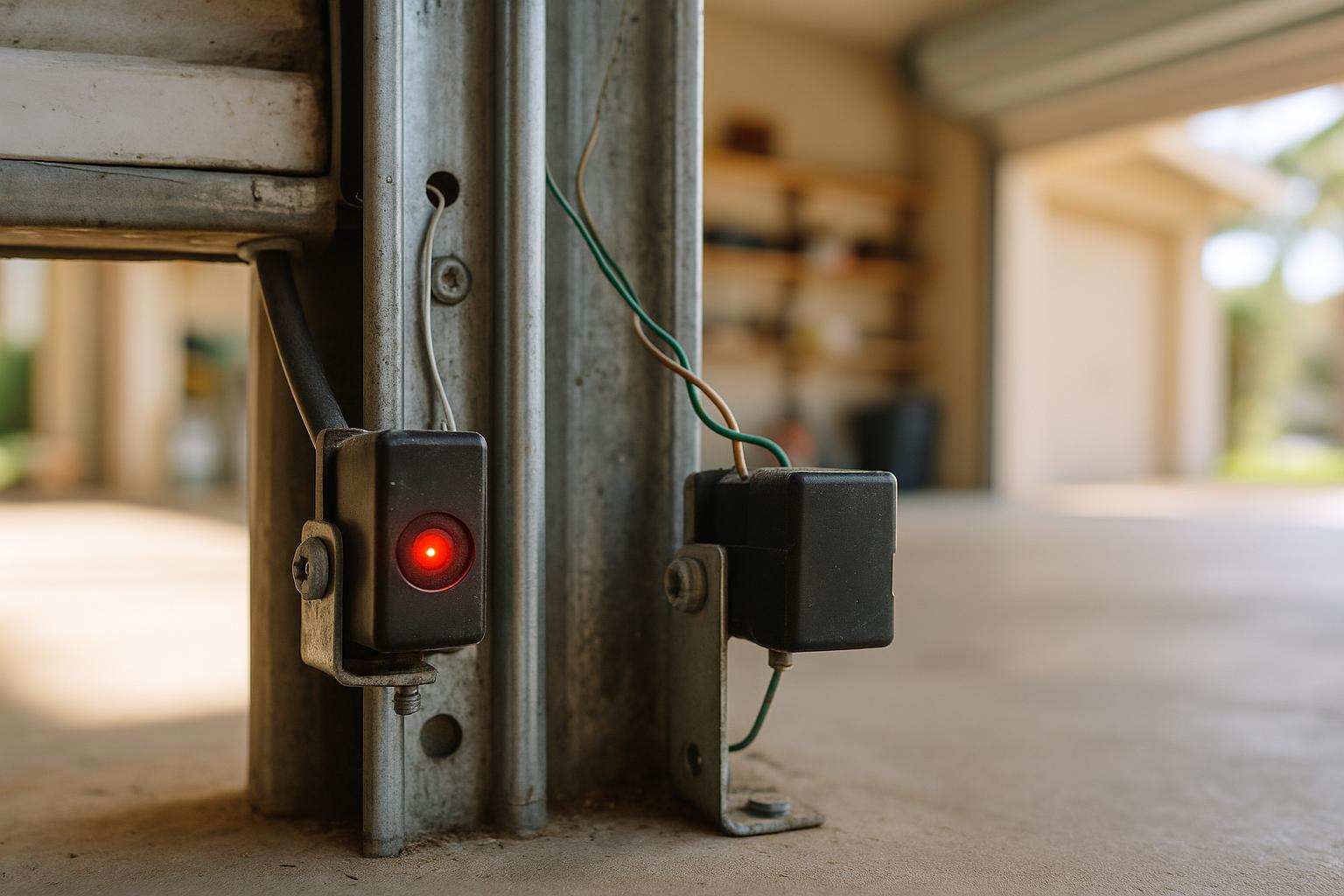
This is the number one reason garage doors reverse before closing completely. Every garage door opener manufactured after 1993 is required by federal law to have photo-eye safety sensors. These are the two small devices mounted near the bottom of your garage door tracks, about six inches off the ground. One sends an invisible infrared beam to the other. If anything breaks that beam — a bike, a trash can, a leaf, or even a spiderweb — the opener interprets it as an obstruction and reverses the door.
Here's what to check:
- Look for obstructions. Move anything near the sensors and clear away cobwebs or debris.
- Check the alignment. Each sensor typically has a small LED light. If one is blinking instead of staying solid, the sensors aren't lined up properly. Gently adjust the misaligned sensor until both lights are steady.
- Clean the lenses. Tallahassee's humidity and pollen can coat sensor lenses with a film over time. Wipe them down with a soft cloth.
- Check the wiring. Look for frayed or damaged wires running from the sensors back to the opener unit. Lawn equipment and pests can damage these wires.
The Close-Limit Switch Needs Adjustment
Your garage door opener has settings called limit switches that tell it how far the door should travel when opening and closing. If the close-limit is set incorrectly, the opener thinks the door has hit the ground (or an obstruction) before it actually has, and it reverses as a safety precaution.
On most openers, you'll find limit adjustment screws on the back or side of the motor unit. The close-limit screw (often labeled "down") can be turned in small increments to allow the door to travel further before stopping. Your owner's manual will have specific instructions for your model. If you're not comfortable making this adjustment, it's a quick fix for any garage door technician.
The Tracks Are Dirty, Bent, or Misaligned
Your garage door rides along metal tracks on either side of the opening. If those tracks are bent, have accumulated dirt and grime, or have shifted out of alignment, the door can bind or stick during its travel. When the opener encounters that resistance, it may interpret it as an obstruction and reverse.
Visually inspect the tracks from top to bottom. Look for:
- Visible dents or bends in the metal
- Gaps between the track and the wall-mounted brackets
- Buildup of dirt, grease, or debris inside the track channel
You can clean tracks with a damp cloth and a mild household cleaner. However, if a track is bent or has shifted, don't try to force it back into place yourself. Improperly adjusted tracks can cause the door to fall, which is a serious safety hazard.
Worn or Broken Springs Are Creating Resistance
Garage door springs do the heavy lifting — literally. They counterbalance the weight of the door so the opener doesn't have to work as hard. When springs wear out, lose tension, or break, the door becomes much heavier for the opener to move. This added resistance can trigger the opener's force settings and cause a reversal.
Signs that your springs may be the problem include:
- The door feels unusually heavy when you try to lift it manually
- You hear loud squeaking or grinding during operation
- You notice a gap in one of the torsion springs above the door
- The door opens unevenly or appears crooked
Spring replacement is not a DIY job. Garage door springs are under extreme tension and can cause serious injury if handled improperly. This is one repair that should always be left to a trained technician. In Tallahassee's climate, where heat and humidity accelerate wear on metal components, we recommend having springs inspected annually.
The Opener's Force Settings Are Off
In addition to limit switches, your opener has force settings that control how much power the motor uses to open and close the door. If the close force is set too low, the opener may not have enough power to push the door all the way down, especially if there's even slight friction in the system. It gives up and reverses.
Like the limit switches, force adjustments are usually made with screws or dials on the opener unit. Increase the close force in small increments and test after each adjustment. Be careful not to set it too high — the force settings exist to prevent the door from crushing objects or people beneath it.
The Opener Is Aging Out
Garage door openers typically last 10 to 15 years with proper maintenance. As they age, the internal gears, circuit boards, and motors can wear down, leading to erratic behavior like random reversals, failure to respond to remotes, or unusual noises. If your opener is approaching or past that age range and you're experiencing frequent issues, replacement may be more cost-effective than continued repairs.
Modern openers also come with significant upgrades over older models, including battery backup systems, smartphone connectivity, quieter belt-drive motors, and improved safety features. If you're considering an upgrade, it's worth exploring what's available today.
When to Call a Professional
Some of the fixes above — cleaning sensors, clearing obstructions, wiping down tracks — are perfectly safe for homeowners to handle. But if you've tried the basics and the door is still reversing, or if the problem involves springs, tracks, or opener internals, it's time to bring in help.
At Tallahassee Garage Door Co, we diagnose and fix reversal issues every week. We serve homeowners across Tallahassee, Crawfordville, Quincy, Midway, and the surrounding communities. Our technicians show up on time, explain what's wrong in plain language, and get your door working properly — usually in a single visit.
Don't Ignore a Reversing Garage Door
It might be tempting to just use the side door and deal with it later. But a garage door that won't close properly is a security risk, an energy efficiency problem, and an invitation for pests — especially during Tallahassee's warm, humid months. The longer you wait, the more likely a minor issue becomes a major repair.
If your garage door keeps reversing and you can't figure out why, give us a call. We'll get to the bottom of it and get your door back on track.