
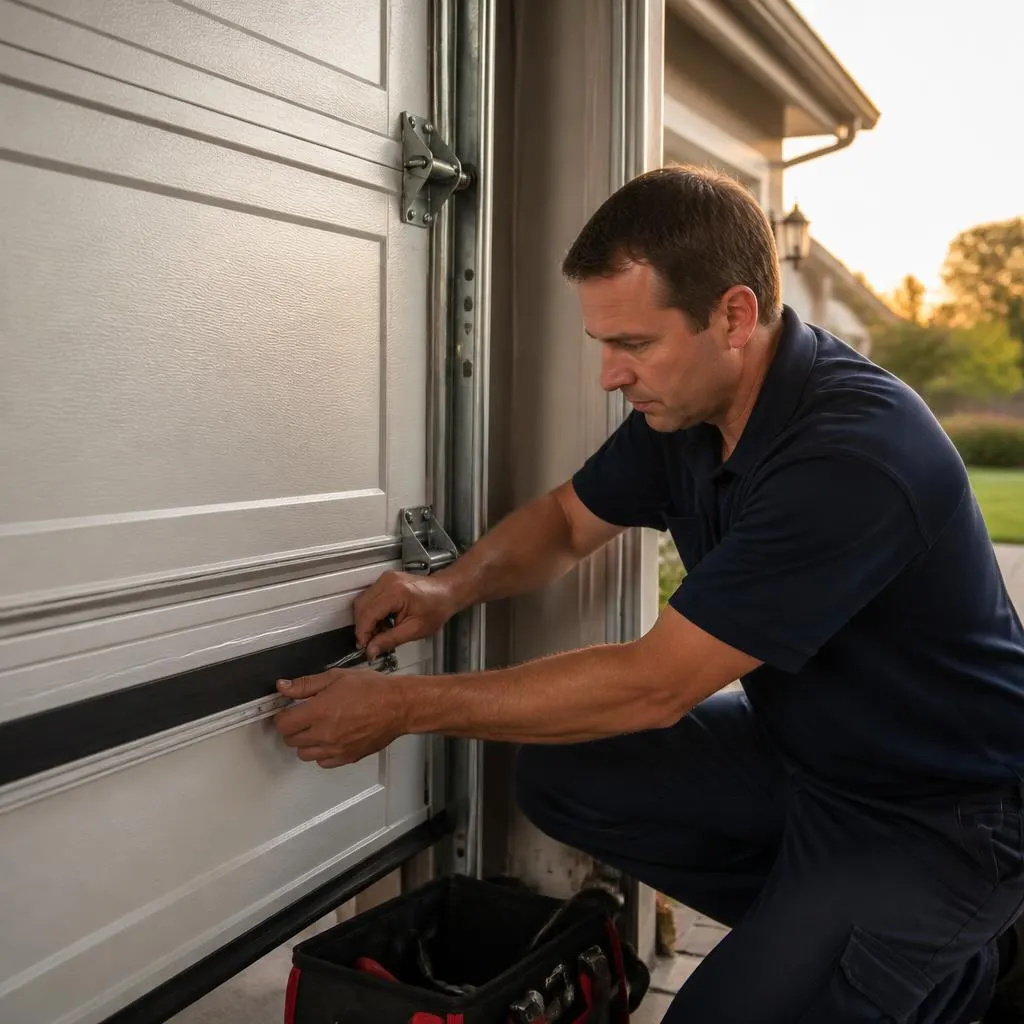
Here's what waiting another season costs you: a spring that's been grinding since spring turns into a door that won't open the morning you're late for work, a wind-loaded panel that cracks in the first real storm turns into a safety hazard and a bigger bill, and a "we'll figure out who pays" conversation turns into a security deposit fight. One more season of pretending the garage door isn't anybody's problem usually ends with it being everybody's problem — at the worst possible time, like the middle of hurricane season.
The General Rule (Before You Argue About It)
There's no single law that spells out every garage door scenario, so most of this comes down to the lease and plain common sense. The pattern that holds up almost everywhere:
- Landlord's job: structural components, safety systems, and anything that's failed due to normal wear — springs, cables, the opener itself, tracks, rollers, the door panels, and weatherstripping that's degraded from age or humidity.
- Tenant's job: damage they caused — backing a car into the door, forcing it when it's stuck instead of reporting it, letting kids slam it, or ignoring a problem until it gets worse.
- Gray zone: batteries in the remote, lightbulbs, keeping the track clear of stored junk, and reporting problems promptly. A lease should say who handles these, but if it doesn't, assume the tenant handles the small stuff and reports the big stuff fast.
If your lease is silent on garage doors entirely — which is common — the safety-and-structure-versus-damage-you-caused split above is the fair default both sides can usually agree on without a lawyer.
What to Inspect at Move-In (Before Anyone Signs Anything)
A five-minute walkthrough at move-in saves both the landlord and tenant from arguing later about whether something was already broken. Do this together, and take photos with a timestamp.
- Open and close the door manually (disconnect the opener first) to feel for resistance, grinding, or one side lagging behind the other.
- Check the springs above the door for visible rust, gaps in the coil, or obvious stretching. Don't touch them — just look.
- Look at the tracks for dents, rust, or gaps where they bolt to the wall. Humid storage spaces are hard on metal tracks over time.
- Test the opener's reverse safety feature by placing a block of wood in the door's path. It should stop and reverse, not keep closing.
- Check weatherstripping along the bottom and sides. In this climate, rubber seals swell, crack, or go soft faster than in drier regions, and gaps let in humidity and pests.
- Note any panel damage — dents, cracks, or warping — especially on older wood or composite doors that can swell after repeated afternoon downpours.
- Test the remote and keypad to confirm both work, and ask who's responsible for replacing batteries going forward.
Write down what you find, date it, and both parties should keep a copy. If the door has an obvious cosmetic issue but still functions safely, note it anyway — it's proof it existed before the tenant moved in.
Where the Weather Changes the Conversation
In this part of Florida, a garage door isn't just a convenience item — it's part of the home's wind resistance during storm season. A landlord who ignores a door that's failing wind-load bracing, or whose track has rusted loose from years of humidity, isn't just skipping cosmetic maintenance; they're leaving a structural weak point in the house. That's firmly a landlord responsibility, not something a tenant should be expected to pay for out of pocket.
On the flip side, if a tenant leaves the door open during a storm and water damages the opener or warps a wood panel, that's a different conversation. The lease should spell out who's responsible for storm prep — closing the door before high wind events, not propping it open during downpours — because in this climate that's not a hypothetical, it happens most years.
Settling the Argument in Writing
If your lease doesn't mention the garage door at all, add an addendum before move-in. A few sentences covering who pays for routine maintenance, who pays for storm or wear-related failures, and who pays for tenant-caused damage will prevent almost every dispute before it starts. It's cheaper than a mediator and faster than guessing later.
When to Call Tallahassee Garage Door Co
If you're a landlord trying to get ahead of problems before a new tenant moves in, or a tenant who needs a neutral third party to say "this is wear and tear, not damage," that's exactly the kind of call we take. We offer Garage Door Maintenance visits that catch rust, worn rollers, and failing weatherstripping before they turn into a locked-out tenant or a liability issue, and Garage Door Repair for anything that's already failed — springs, openers, tracks, panels. We'll also give you a written assessment of a door's condition, which is useful for both sides of a move-in dispute.
If you own rental property anywhere from Tallahassee out to Midway, Havana, Quincy, Crawfordville, Monticello, Woodville, or Centerville, don't let a garage door disagreement sit through another storm season. Call Tallahassee Garage Door Co and get it inspected, documented, and fixed before it becomes an argument — or a safety problem.