
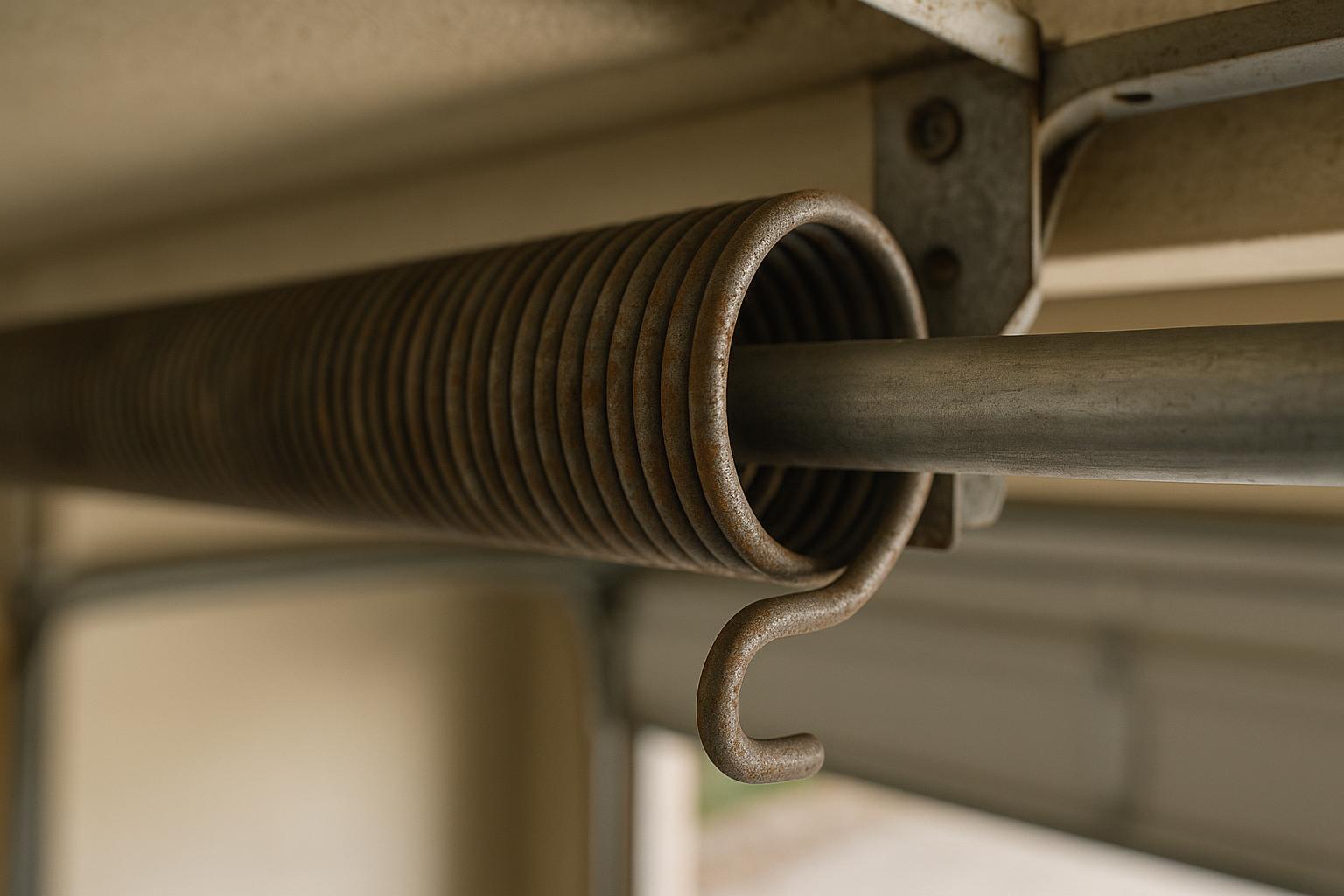
Your Garage Door Springs Are Trying to Tell You Something
If you've ever had a garage door spring break, you know it's not subtle. The loud bang, the door that suddenly won't open, the panic of being late for work with your car trapped inside — it's one of those household emergencies that catches people completely off guard.
But here's the thing: garage door springs almost always give warning signs before they fail. Most homeowners in Tallahassee just don't know what to look for. If you can spot the early signs of spring fatigue, you can replace them on your schedule instead of dealing with an emergency repair at the worst possible time.
How Garage Door Springs Work (and Why They Wear Out)
Your garage door is the heaviest moving object in your home. A standard residential door weighs between 130 and 350 pounds, and the springs do the heavy lifting — literally. They counterbalance the weight of the door so your opener doesn't have to muscle it up and down on its own.
There are two main types of garage door springs:
- Torsion springs — mounted on a metal shaft above the door opening. These are the most common type in modern garage doors.
- Extension springs — mounted along the horizontal tracks on either side of the door. These are more common in older homes.
Both types are rated for a specific number of cycles. One cycle equals one open and one close. Most standard springs are rated for about 10,000 cycles, which translates to roughly 7 to 10 years of normal use. High-cycle springs can last 20,000 to 50,000 cycles, but they cost more upfront.
Tallahassee's humid subtropical climate also plays a role. The moisture in our air accelerates rust and corrosion on metal springs, which can shorten their lifespan if they're not properly maintained.
7 Warning Signs Your Springs Are Failing
1. The Door Feels Heavier Than Usual
Try this simple test: disconnect your garage door opener by pulling the emergency release cord, then manually lift the door about halfway. A properly balanced door should stay in place on its own. If it feels noticeably heavy, slides back down, or requires real effort to lift, your springs are losing tension and nearing the end of their life.
2. The Door Opens Unevenly or Crooked
If one side of your garage door rises faster than the other, it usually means one spring is weaker than its counterpart. This puts uneven stress on the door, the tracks, and the opener. Left unchecked, it can cause additional damage beyond just the springs.
3. You Hear Squeaking or Grinding Noises
Some noise during operation is normal, but new or worsening squeaking, popping, or grinding sounds often indicate that springs are losing their elasticity or that coils are rubbing against each other unevenly. Don't ignore new sounds — they're your door's way of asking for help.
4. Visible Gaps in the Spring Coils
Take a look at your torsion springs when the door is closed. Healthy springs have tightly wound, evenly spaced coils. If you notice a visible gap or separation between coils — even a small one — the spring is stretched and weakened. This is one of the most reliable visual indicators that failure is imminent.
5. Rust and Corrosion on the Springs
Rust does more than look bad. It increases friction between the coils, which accelerates wear and weakens the metal. Given how humid it gets here in Tallahassee, especially during the summer months, rust on garage door springs is extremely common. Regular lubrication helps, but once corrosion is significant, replacement is the safer option.
6. The Opener Struggles or Strains
Your garage door opener is designed to move a balanced door, not to lift the full weight on its own. If your opener sounds like it's working harder than usual — straining, running longer, or stopping mid-cycle — failing springs may be forcing it to compensate. This can burn out your opener motor prematurely, turning one repair into two.
7. The Door Slams Shut Quickly
A door that drops fast when closing has lost the controlled resistance that springs provide. This is a safety hazard, especially if you have children or pets. If your door is closing faster than it used to, have your springs inspected as soon as possible.
Can You Replace Garage Door Springs Yourself?
We get this question a lot, and the honest answer is: you shouldn't. Garage door springs are under extreme tension. A torsion spring on a standard two-car garage door can hold the equivalent of several hundred pounds of force. If a spring snaps or a winding bar slips during a DIY replacement, the results can be catastrophic — broken bones, lacerations, or worse.
This is one of those jobs where the risk simply isn't worth the savings. Professional technicians have the tools, training, and experience to replace springs safely. At Tallahassee Garage Door Co, we see the aftermath of DIY spring repairs more often than we'd like, and it's never pretty.
Should You Replace Both Springs at Once?
If one spring breaks, we strongly recommend replacing both at the same time. Here's why:
- Both springs were installed at the same time, so they've experienced the same number of cycles. If one has failed, the other is close behind.
- Replacing both ensures even balance and smooth operation.
- You save on labor costs since the technician is already there with the door disassembled.
Replacing just one spring might save a few dollars today, but you'll likely be calling for another repair within months.
How to Extend the Life of Your Springs
While springs won't last forever, you can get more years out of them with a few simple practices:
- Lubricate your springs — Apply a silicone-based or white lithium grease spray to your springs every three to four months. This reduces friction and helps prevent rust, which is especially important in Tallahassee's humid climate.
- Schedule annual inspections — A professional can spot early signs of wear, check spring balance, and make adjustments before small problems become big ones.
- Upgrade to high-cycle springs — If you're replacing springs anyway, consider investing in high-cycle options. They cost more upfront but can last two to five times longer.
- Keep the door balanced — An unbalanced door puts extra stress on springs. If your door doesn't pass the manual balance test described above, call a technician.
Don't Wait for the Bang
A broken garage door spring is one of the most common — and most preventable — garage door emergencies we handle across Tallahassee, Crawfordville, Quincy, and the surrounding areas. If you've noticed any of the warning signs above, the smartest move is to schedule an inspection now rather than waiting for the spring to snap at 7 AM on a Monday morning.
Tallahassee Garage Door Co offers fast, professional spring replacement and can usually get your door back in working order the same day. Whether your springs are showing early signs of wear or have already broken, give us a call and we'll take care of it safely and affordably.